How Rollator Seat Became The Hottest Trend In 2024
Rollator Seat Enhances Comfort and Convenience A rollator seat offers an ideal resting spot during walks or excursions. These unique mobility aids let seniors enjoy the scenery, events and activities they cherish without having to worry about fatigue or discomfort. Begin by determining the handle's height to determine the correct rollator. Find the distance between your hips to the floor and add an inch or two. Comfortable Seating Many rollators come with an integrated seat, providing users a convenient spot to sit while out on walks or just relaxing. They are usually padded to provide comfort, and they can be folded away when not making use of it. Some also include storage options such as bags or baskets to store personal belongings, food items or medical supplies. When selecting the best rollator with seating be sure to take into account the user's preferences and needs. Seat-to-floor-height should be compatible with the measurements of the user. To measure best lightweight rollator walker with seat , let the user stand in their regular shoes with arms resting at their sides, with their elbows bent slightly, and record the distance between the floor and center of their wrist (this is the height of their hand). Make sure that the seat's depth supports your thighs when you are seated upright. Choose a seat with a backrest that supports all the length of your spine. This design eases the burden on joints and muscles through evenly dispersing their weight across the seat. A curved backrest is also crucial for providing adequate spinal support. The lower five lumbar spinal spines form the concave curvature small of the back and connect to the sacrum (a large triangular-shaped bone at the base the pelvis). In the middle are the twelve thoracic vertebrae which form a convex curve in the middle of the back, and lastly the seven cervical vertebrae of the neck. While a backrest that is curved can be a cost-saving option however, it's worth the investment to improve both comfort and performance. The additional support provided by a seat that is curved can assist the user to maintain a good posture while sitting, which may lead to less stress on their shoulders and back. When you are looking for a rollator the frame's width and seat size to ensure it can pass through commonly used passageways and doors. It's also a good idea to check for available spare parts in the event that the unit becomes damaged beyond repair. Usually the manufacturer will provide the links to where they can be purchased from their website. Adjustable Seat-to-Floor Height A properly adjusted seat height is essential to improve stability for the client, reducing thigh fatigue and encouraging good posture. The height of the seat is measured from the back to the popliteal fossa, or the kneecap of the user. A person might require a lower seat-to-floor height to achieve a functional heel strike while self-propelling, or due to postural reasons like keeping the hips in a neutral position for transfer or to help support an angle that is higher between the thigh and the trunk for postural correction. Bariatric models are offered for users of rollators who require an elevated seat to floor height. They have a larger seating area and can hold up 500 pounds. They are generally larger than standard four-wheel rollators and feature a strengthened frame with high-quality wheels that are large enough to support heavier weights. The type of seating is also crucial. The seats that are cushioned are soft and more comfortable than plastic that is not padded, which can become uncomfortable and hot after long use. Padded and contoured seats are typically more expensive than unpadded seating however they are worth the investment for comfort and longevity. If a client has a restricted range of movement in their legs, a padded or contoured seat that can elevate them to a more upright posture will be more appropriate. This will lessen the strain placed on their knees and hips while walking, and enable them to participate in MRADLs with no additional caregiver assistance. Before making a purchase before making a purchase, it's recommended to test the rollator's seating height in a shop or even at home. Request the customer to sit on the chair with their feet down on the floor and without shoes. Keep their elbows a little bent and their arms on the sides. Measure from the center of their wrist to the floor to determine the handle's height that's best for them. For optimal performance, it's essential that the seat height and handle height are in line. When the seat is set to an ideal height and the handles are at a comfortable length, the user can relax more comfortably and lessen the strain on joints and muscles. It is also beneficial to consider the size of doors and passageways when deciding if a specific model can negotiate those obstacles. Storage Baskets or Pouches A rollator seat can come with storage baskets or pouches that aid in carrying personal items or medical gear on longer trips. These items are usually located beneath the seat and secured with straps or flaps that can be closed and opened. Some models have a wire or mesh basket and others include a tray that holds the bag securely. Some tray models are able to be removed for cleaning, which makes it easier to keep the interior tidy. Many people like to use accessories for their rollators to enhance its performance and user-friendliness. For example, a cup holder attachment can help you hold a beverage using hands, while food tray provides a convenient place to store on-the-go snacks and meals. The majority of manufacturers offer a range of attachments that are compatible with their particular models. The Hugo Mobility Explore is a model that we liked that features a spacious under-seat storage bag for accessories and a handy folding mechanism. It is one of the lightest models we have tested. The huge, all-terrain, 8-inch wheels also make it an excellent choice for outdoor use. Panelists also liked the fact that this model folds down to a compact size, making it easy to carry in a vehicle or on public transport. When shopping for the best rollator, buyers must consider the frame material along with the weight capacity and color. Aluminum frames are light and provide stability and aplomb. Steel frames are stronger for those who weigh up to 250 pounds. Some models offer heavy-duty or bariatric rollators that are able to handle heavier weights and are wider to accommodate larger people. Some also have a padded seat, which helps reduce pressure points and help relieve the pain caused by conditions like sciatica or arthritis. Accessories Accessories for rollators are customizable to meet the requirements of each user. Soft cushions for the seat and heights that can be adjusted from the floor to the seat and baskets or storage pouches are just a few of the options that can improve the comfort and ease of use. 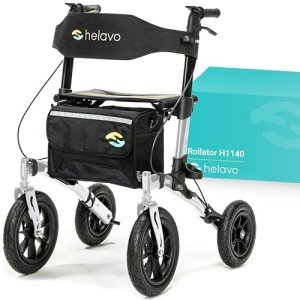 A lot of these accessories assist in reducing strain on muscles and joints and joints, thereby promoting overall mobility. The addition of padding to the seat can make it more comfortable for users who are frequently resting or recovering from surgery or injury or injury. Arm rests that are padded can ease discomfort during long walks or sitting for long periods of time. Other popular options include the cup holder or walker tray that can be used to carry personal belongings, snacks and medical supplies without having to reach for the handles or use a hands-free alternative like a tote bag. Some rollator models offer the option of adding an upholstered seat that folds down making it easier to move from walking to sitting. Unpadded plastic seats are simpler to clean and provide the feeling of stability. While padded seats can be more comfortable, they can also be more durable. The most important thing to do is choose the right seat that is safe and suitable for your lifestyle. It is crucial, for example, to make sure that the brakes have been activated and are on before settling down. Inadequately, it could cause injury or fall. A skilled senior caregiver in-home can assist in promoting the safety guidelines for using a rollator by reminding the patient to activate the parking brake prior to moving from standing to sitting positions. The correct wheels can be a major element in how well the rollator performs. Smaller wheels, usually 6” or 7”, have a tighter turn radius. This is helpful for maneuvering in tight spaces and around furniture. The larger wheel sizes can reach 10” in diameter, and provide smoother rides on uneven outdoor terrain. A rollator that has locking wheels also provides additional security and stop the brakes from getting accidentally disconnected in the course of use.